


Guides
StatTrak Explained: Is It Worth the Extra Cost

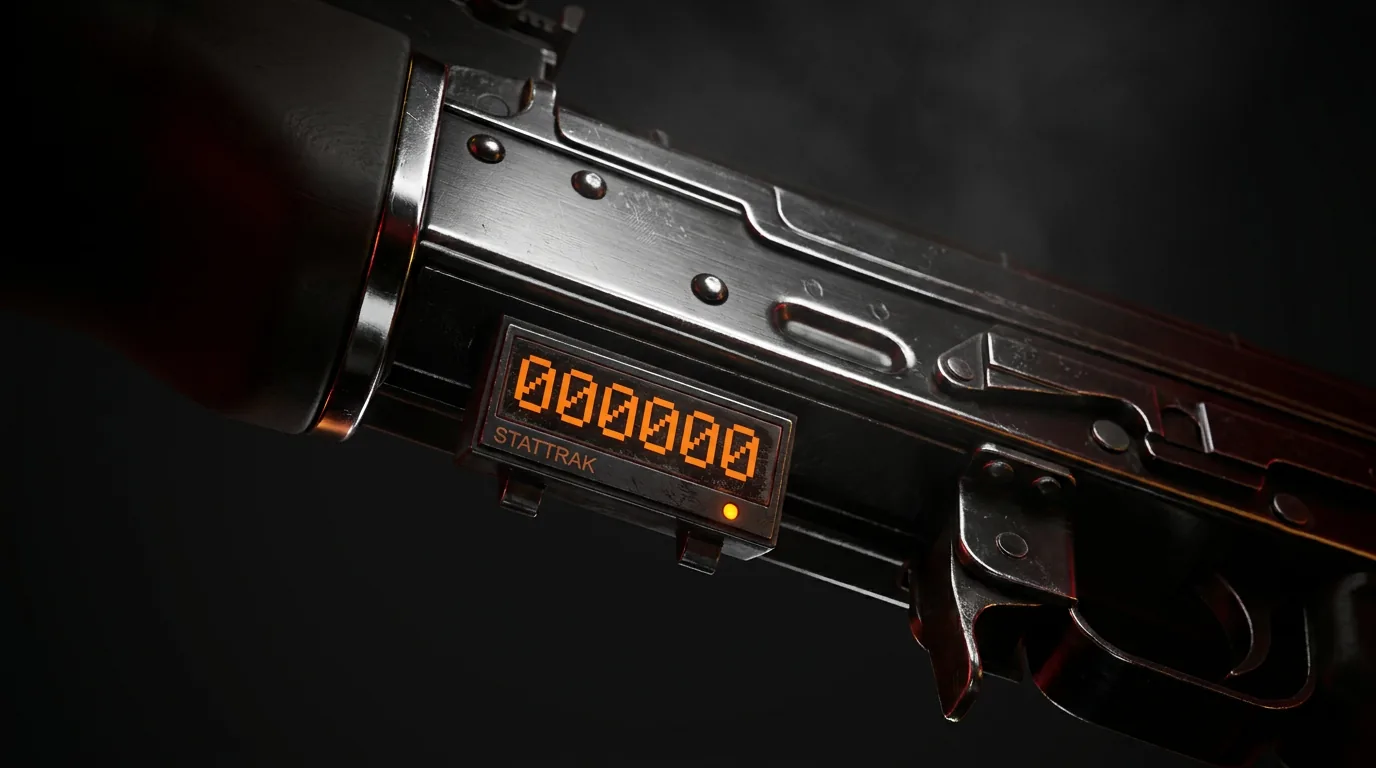
StatTrak bolts a live kill counter onto a weapon and charges you for the privilege. On some skins that premium is entirely reasonable and the item is easier to sell than the normal version. On others you are paying extra for something that actively makes the skin worse. The difference is predictable once you know what drives it.
What StatTrak actually is
A StatTrak item is a variant of an existing skin with a counter built into the model. It carries the StatTrak prefix in its name, displays a distinct orange-tinted name colour in your inventory, and shows a running total of confirmed kills on the weapon itself — visible in first person, in the inspect view, and to anyone looking at your loadout.
The counter is permanent and cumulative. It doesn’t reset when you die, when you end a match, or when the item changes hands. If you buy a StatTrak weapon from someone else, you inherit their number and keep counting from there.
Music kits work the same way with a different metric: a StatTrak music kit counts MVP awards rather than kills.
Where StatTrak items come from
StatTrak versions are generated at the moment a skin is unboxed. When a case produces a weapon finish that supports StatTrak, there’s a 10% chance the item comes out as the StatTrak variant. That roll is independent of which skin you got and what wear it rolled, so StatTrak copies of any given skin are roughly a tenth as common as normal ones.
Not every skin has a StatTrak counterpart. The variant exists for finishes that come from cases. Skins that drop from map collections and items that arrive in Souvenir packages have no StatTrak version at all — and Souvenir and StatTrak are mutually exclusive by design, so you’ll never see an item that is both.
| Item type | StatTrak available? | What it counts |
|---|---|---|
| Case weapon skins | Yes | Confirmed kills |
| Knives | Yes | Confirmed kills |
| Gloves | No | — |
| Music kits | Yes | MVP awards |
| Map collection skins | No | — |
| Souvenir items | No | — |
| Agents, stickers, patches | No | — |
Trade-up contracts respect the distinction. StatTrak inputs produce a StatTrak output, normal inputs produce a normal one, and you cannot mix the two in a single contract. That makes StatTrak trade-ups a separate, thinner market with its own supply dynamics.
What actually increments the counter
The counter tracks confirmed kills you get while holding that specific weapon in online play. Kills with a different weapon don’t count toward it, obviously — but the more common misunderstanding is that everything counts. It doesn’t. Offline practice against bots is not a way to farm the number, and utility kills don’t credit the rifle in your hands.
The practical implication for buyers is straightforward: the number on a StatTrak item you’re considering represents real play by a real person. It cannot be faked upward cheaply.
The StatTrak Swap Tool
Valve sells a consumable called the StatTrak Swap Tool that exchanges the counters between two StatTrak items of the same type in your own inventory — two weapons, or two music kits. The tool is consumed in the process.
Its main use is practical rather than speculative: you’ve built up a large count on a skin you’ve grown tired of and want to carry that history onto a new one. It’s worth knowing the tool exists before you make a decision based on a count, because counts are not permanently welded to a particular finish.
What StatTrak does to price
StatTrak always costs more than the equivalent normal skin at the same wear. The size of that gap varies enormously, and it tracks demand rather than the 10% supply figure. StatTrak copies are about a tenth as common, but nothing like a tenth of buyers want them — so the premium settles well below what the scarcity alone might suggest.
Where the premium is largest
The gap is widest on weapons people genuinely play with and look at constantly. Rifles that get bought most rounds, the AWP, and knives — where you’re staring at the model for a large share of your screen time — carry the strongest StatTrak demand. There’s a clear appeal to a counter that visibly accumulates on a weapon you actually use.
It’s also large on skins where the design accommodates the counter well. On some finishes the module sits on a plain section of the model and looks like it belongs; on those, StatTrak reads as an upgrade.
Where StatTrak is a liability
On weapons that rarely get bought, StatTrak adds cost without adding much desirability, because nobody is accumulating kills with them anyway. A counter on a gun that sees a handful of kills a month is a decorative element, not a stat display.
More importantly, on skins built around a clean, continuous surface — gradients, polished metals, artwork that runs across the whole model — the counter module interrupts the design. The panel sits in a fixed position on each weapon regardless of the finish, so on some skins it cuts straight through the part of the artwork that makes the skin worth owning. Inspect a StatTrak version before buying one; a surprising number of players are unpleasantly surprised by where the counter lands.
Does the kill count itself add value?
Mostly no, and this is where a lot of sellers overreach.
The market broadly treats the counter as a cosmetic detail on a used item rather than as a value-bearing property. Two otherwise identical StatTrak skins with very different counts generally trade close to each other. There’s niche interest at the extremes — genuinely enormous counts on a high-value item, or novelty numbers — but it’s a thin, personality-driven corner of the market and not something to base a purchase on.
There is real, if modest, demand in the opposite direction: some collectors specifically want a counter at or near zero, on the logic that they’d rather build the history themselves. If you’re buying a StatTrak item as a long-term hold, a low count is the safer starting position.
Either way, treat a seller pricing in a big premium purely for the number on the side as someone to negotiate with.
The liquidity trade-off
StatTrak items have a smaller buyer pool than their normal counterparts. On popular weapons that’s barely noticeable — there are plenty of people who specifically want StatTrak and it moves fine. On less popular weapons it matters a lot, and you can end up holding an item that’s simultaneously more expensive to buy and slower to sell.
That asymmetry is the single most underrated cost of StatTrak. Before paying the premium, ask yourself honestly whether this is a skin you’re keeping or a skin you’ll want to move on from. The premium is far easier to recover on the ten weapons everyone uses than on the thirty they don’t.
How to decide
Buy StatTrak when you’ll actually play with the weapon regularly, when the counter sits somewhere on the model that doesn’t damage the artwork, and when the weapon is popular enough that the resale pool is healthy. The counter is genuinely satisfying on a gun you use every round, and that’s a legitimate thing to spend on.
Skip StatTrak when the skin’s appeal is a clean unbroken surface, when the weapon isn’t part of your regular buy, or when the premium is stretching your budget to the point of forcing you into a worse wear. A Factory New normal version of a skin you love will usually please you more than a Field-Tested StatTrak of the same thing.
And if you’re buying primarily as an investment rather than to play, weigh the thinner buyer pool carefully. Scarcity only helps if demand exists to meet it.
Practical takeaway
StatTrak is a 10% roll at unboxing that adds a permanent, transferable kill counter. It’s available on case weapon skins and knives, never on gloves or Souvenir items, and it can’t be mixed with normal items in trade-ups.
The premium is real but demand-driven, largest on weapons people actually play and on designs the counter doesn’t spoil. The count itself is mostly cosmetic in value terms, with a mild preference for low counts among collectors. Inspect the model before you buy so you know exactly where the counter sits, and factor in the narrower resale market — that’s the cost most buyers forget to price in.