


Guides
Are CS2 Cases Worth Opening? An Honest Look at the Odds

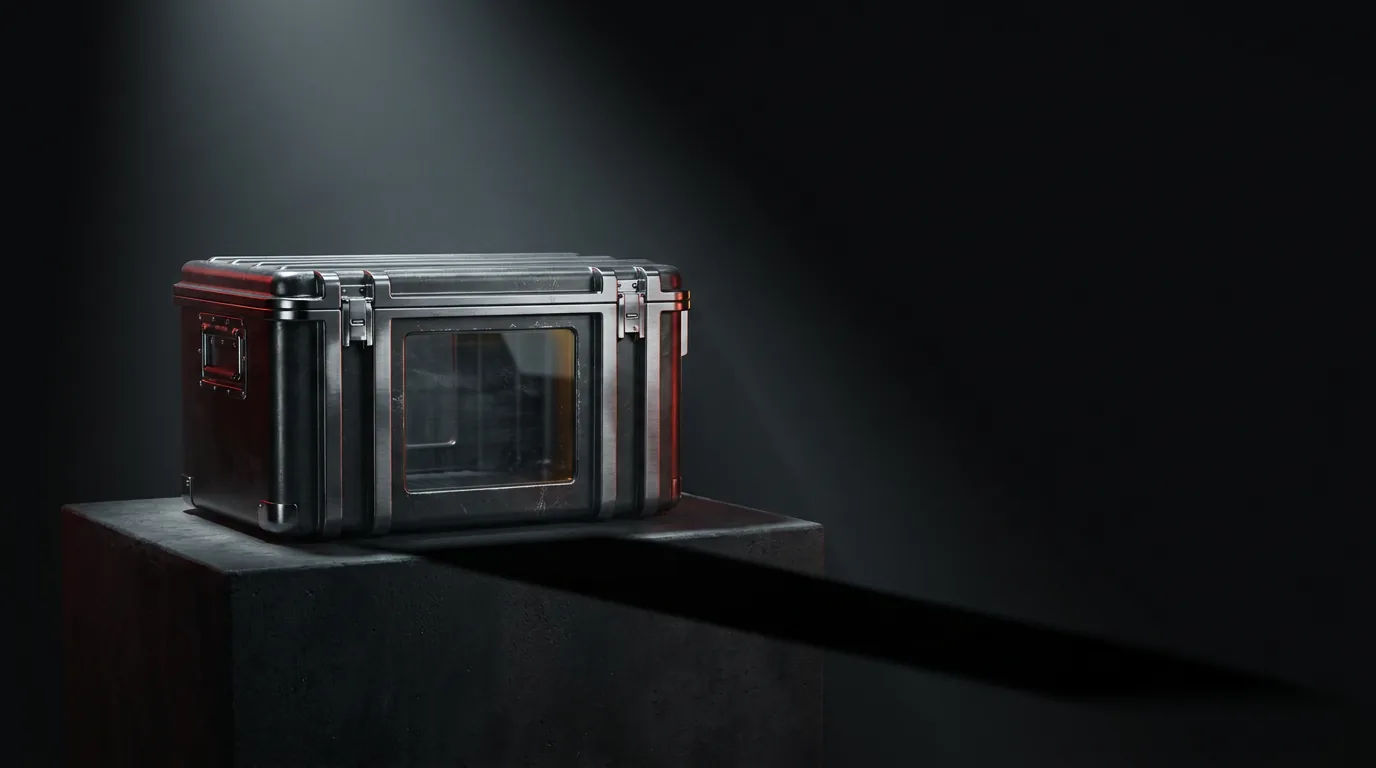
Case opening is the most emotionally persuasive and least mathematically flattering thing you can do with a CS2 inventory. The odds are published, the structure is simple, and the conclusion is uncomfortable. Here it is without the hype.
The published structure
Valve publishes the draw rates for weapon cases. Every standard case follows the same tier distribution:
| Tier | Published draw rate |
|---|---|
| Mil-Spec (blue) | 79.92% |
| Restricted (purple) | 15.98% |
| Classified (pink) | 3.20% |
| Covert (red) | 0.64% |
| Rare Special Item (knife or glove) | 0.26% |
Each tier is roughly one fifth as likely as the one beneath it, with the gold tier sitting at just over a quarter of a percent. Separately, cases that support StatTrak roll it at around one in ten, applied to whatever item you drew — including the special item.
Those numbers are the whole game. Everything else in this article is a consequence of them.
What they mean in practice
Four openings out of five return a blue-tier skin. Roughly one in six returns a purple. Pink shows up around once every thirty-odd cases, red around once every hundred and fifty, and the gold tier around once every four hundred. Those are averages over a long run, not schedules — see the section on variance below.
The tier you draw is only half the outcome. Condition is rolled independently, and a Covert in Battle-Scarred can be worth a small fraction of the same skin in Factory New. So even the rare outcomes carry a wide internal spread.
Why “expected value” is the wrong headline
People calculate the expected return of a case by multiplying each outcome’s market price by its probability. That number is real, but treating it as “what you get back” is a category error, because the distribution behind it is violently skewed.
Almost all of the expected value is concentrated in the outcomes you will almost never hit. Strip out the special item tier and the expected return collapses. That means the average result and the typical result are nowhere near each other. The median outcome of opening a case is a blue-tier skin worth a small fraction of the key — and the median is what you will actually experience, over and over, while you wait for the mean to show up.
This is the same shape as a lottery. The average ticket has a value. No ticket is ever worth the average.
The fee layer
Whatever you unbox has to be converted back into value before it counts as a return, and conversion is not free. Selling on the Steam Community Market costs roughly fifteen percent in combined fees, and the proceeds land in your Steam Wallet, which cannot be withdrawn as money. Wallet balance is only worth something if you were going to spend it inside Steam anyway.
If you want actual liquidity rather than store credit, you are trading outside Steam, which introduces its own spread between what buyers pay and what sellers receive. Either way, the sticker price of the item you unboxed is not the number that lands in your hands.
The key cost is fixed, the case price is not
Keys are sold by Valve at a fixed price and cannot be traded or resold. Case prices float on the open market and move constantly. This asymmetry means the economics of opening a specific case change over time even though the odds never do — and they generally get worse for the opener as a case ages, because case prices for out-of-production cases tend to rise while the fixed key cost stays put.
Variance, and the things people believe about it
Every case is an independent roll. There is no pity timer, no accumulating luck, no account-level modifier, no “the game owes me one”. A hundred openings without a gold does not make the hundred-and-first more likely. This is not a matter of opinion about Valve’s code; it is what an independent draw means, and the published rates describe each individual opening.
Two related beliefs worth killing off:
Opening in a specific pattern, at a specific time, with a specific inventory state, changes nothing. Every superstition about case-opening rituals exists because 0.26% is small enough that people who hit it remember the circumstances vividly and people who do not, do not post about it.
Streamer and video unboxings are selected footage. You are watching the top of the distribution, filtered through thousands of hours of content nobody uploaded. The visible sample is not the real sample.
When opening does make sense
There are honest reasons to open cases, and they are not financial.
Entertainment. The moment of the roll is the product. If you buy a key knowing you are paying for thirty seconds of tension and a blue skin, the transaction is fair on its own terms. Budget it the way you budget any other entertainment spend: money you have already decided you are willing to lose, with a hard limit, and no expectation of return.
Chasing a specific look, cheaply. If the blue and purple items in a case are ones you would happily use, the floor of the outcome is something you actually want. That is a much better position than opening a case whose common outcomes you would immediately sell.
The reason that does not work: wanting a specific rare skin. If you want a particular Covert or a particular knife, buying it directly is nearly always cheaper than unboxing it, and it is certain rather than probabilistic. The expected number of cases you need to open to hit a specific Covert — one item within a tier drawn at 0.64% — is large enough that the maths is not close. Buy the skin.
Cases as an asset instead
There is a structural argument for holding unopened cases that has nothing to do with luck. Valve rotates cases out of the active drop pool. Once a case stops dropping, no new copies enter circulation, while every case that gets opened is destroyed permanently. Supply is fixed and shrinking, and demand persists as long as people keep opening.
That is a genuine supply mechanic, not a theory, and it explains why the case market behaves differently from the skin market. It is also not a guarantee: it depends on the player base staying large, on Valve not changing drop policy, and on continued willingness to buy keys. Cases are a bet on the game’s long-term health, held in an illiquid form with no yield. Treat it as such.
Souvenir packages are a separate calculation
Souvenir packages have no knife tier, so the fat tail that dominates weapon case maths simply is not there. Their value comes from sticker combinations — which teams, which players, which match — and from the condition roll. That makes them less of a lottery in shape but far harder to value, because you need to know what a given player’s signature is worth on a given skin at a given event.
They are also permanently out of production once the tournament ends, which puts them closer to the collectible end of the market than the gambling end.
Practical takeaway
The odds are published and they are not in your favour. Four openings in five give you a blue-tier skin, the special item sits at just over a quarter of a percent, fees take a further cut on the way out, and Steam Wallet funds are not money.
If you want a specific skin, buy it — it is cheaper and it is certain. If you want exposure to the case market, holding sealed cases from out-of-production sets is a coherent position with an actual supply mechanic behind it. And if you open cases anyway, open them because you enjoy the roll, with a fixed budget you have already written off. That is the only version of case opening that does not end in disappointment, because it is the only version where the entertainment was the product all along.