


Guides
Sticker Crafts: What Makes One Valuable

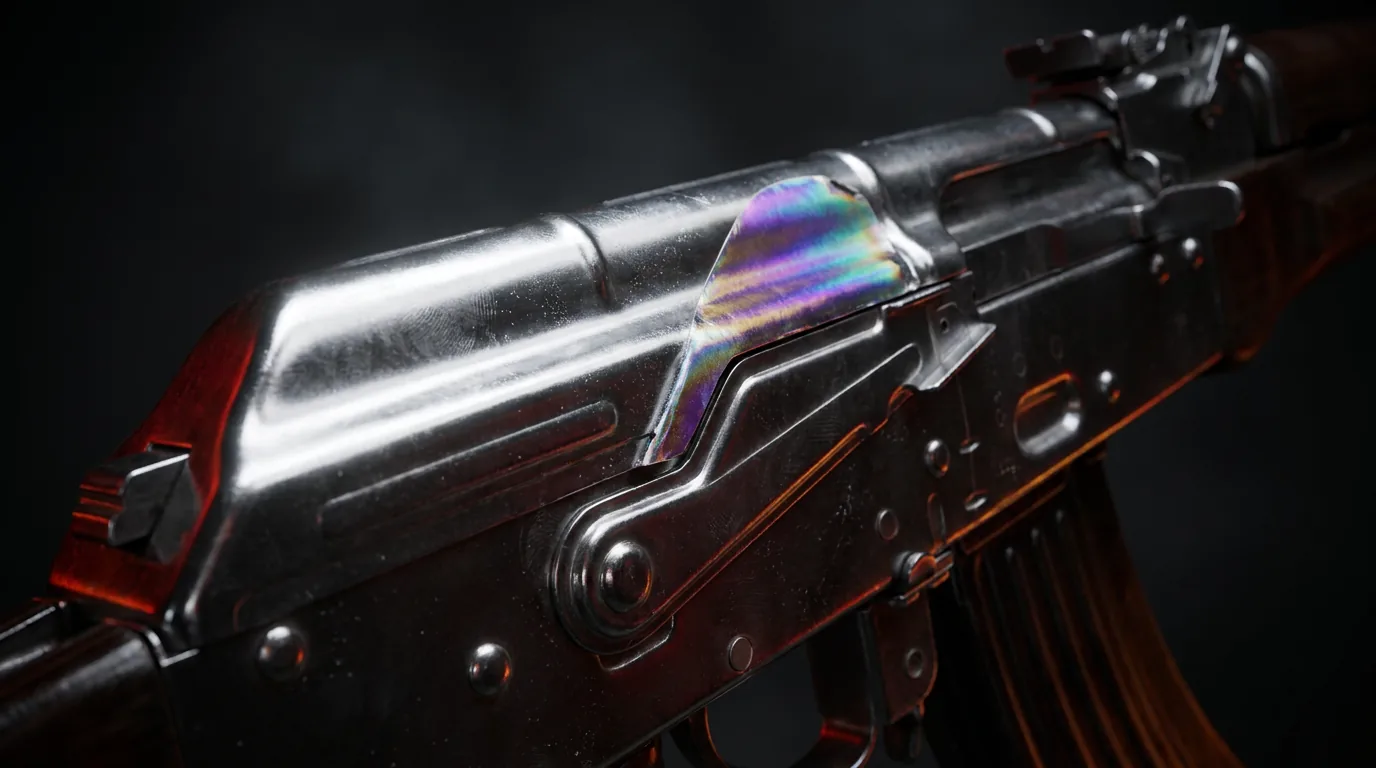
Applying a sticker is one of the few genuinely irreversible actions in CS2. You cannot take it off, you cannot move it, and scraping it destroys it. That permanence is what makes good crafts valuable and bad crafts worthless, often at the same cost.
What a craft is, mechanically
A craft is a weapon skin with stickers applied to it. Most weapons have four sticker slots at fixed positions determined by the model; knives and gloves take none. Once a sticker is applied to a slot it is bound to that item permanently. The only removal is scraping, which wears the sticker down in stages and finally removes it entirely, destroying it in the process.
There is no undo, no refund and no way to transfer a sticker from one weapon to another. Every decision in a craft is final at the moment you confirm it, which is why crafting is worth thinking about before rather than after.
The base does more work than people expect
A craft is a single item, and the market prices it as one. Expensive stickers on a poor base do not produce an expensive craft — they produce an awkward item that appeals to almost nobody.
The base skin needs to earn its place. That means a finish people actually want on a weapon people actually use, in a wear tier that suits it. Float matters here more than on a plain skin, because the buyer for a serious craft is by definition someone paying attention to detail, and a scratched, blotchy base undermines the stickers sitting on it. A low float on a finish where wear is visible is a real contributor to craft value; the same float on a busy pattern that hides everything contributes very little.
Colour is the other half. Stickers sit on top of the finish and either work with it or fight it. A red-dominant sticker on a red-dominant skin can look deliberate; the same sticker on a cold blue finish usually just looks like something landed there. This is aesthetic judgement rather than a formula, and it is the part that separates crafts people seek out from crafts people scroll past.
Finally, the base needs to be one where the sticker positions are actually visible. Some weapon models put slots where you barely see them in first person. That leads directly to the next point.
Placement, alignment and the playside
The side of the weapon you see in first person — the playside — is where a craft lives or dies. A sticker on the far side of the model is largely invisible during play, and the market prices it accordingly.
Within the visible slots, alignment is the detail that separates a good craft from an ordinary one. Fixed slot positions interact with the skin’s own artwork differently on every finish. A sticker that lands centred on a panel, aligned with a stripe, or filling a gap in the pattern looks intentional. The same sticker one slot over might be cut off by a model seam or overlap a design element badly.
There is no in-game preview that shows you this properly before you commit, which means the craft you imagine and the craft you get are not always the same object. Looking at existing examples of the same sticker on the same skin before applying yours is the single most useful preparation step available.
What makes a sticker worth crafting with
Scarcity
Sticker capsules are sold for a period and then discontinued. Once a capsule is no longer available, the total number of those stickers in existence is fixed and can only fall, because every application and every scrape removes one permanently. Stickers from the earliest tournaments are the extreme case: they have been consumed for many years against a supply that stopped growing long ago.
Scarcity alone is not enough, though. There are plenty of scarce stickers nobody wants, because the design is unremarkable or the team is forgotten. Scarcity multiplies desirability; it does not create it.
Finish tier
Stickers come in tiers — ordinary paper finishes at the base, then glossy, holo, foil and gold variants that are progressively rarer within a capsule. The higher tiers carry visual effects that read on the weapon in a way flat stickers do not, and they draw a large share of craft attention for that reason. A holo that shifts colour as you move the weapon is doing something a paper sticker cannot.
Provenance and meaning
Player autographs, team logos, and stickers tied to a specific tournament carry meaning beyond their appearance. A craft that assembles a recognisable line-up, commemorates a particular event, or pairs a player with the weapon they were known for is telling a story, and stories find buyers that random combinations do not.
Quads, themes and coherence
Four of the same sticker — a quad craft — is the most legible statement in crafting, and it is popular precisely because it is unambiguous. It shows intent, it shows you consumed four of a scarce item rather than one, and it produces a consistent look across the weapon.
Themed crafts do something different: four related but distinct stickers built around a colour, an event, a team, or a joke. These live or die on how well the theme reads. A coherent theme that someone else recognises immediately can be worth far more than four unrelated expensive stickers. An idea that only makes sense to you is worth exactly what one person will pay, and that person is you.
Scrapes
Scraping is usually accidental damage, but it is occasionally deliberate. A partially scraped sticker changes its appearance — colours fade, edges wear, and on some designs the result genuinely looks better than the pristine version, particularly when the intention is a worn, used aesthetic that matches a battle-scarred base.
Deliberate scrapes are a specialist taste. Most of the market prefers full, unscraped stickers, and an accidental scrape on a valuable sticker is a straightforward loss. If you are going to scrape, be certain, because each step is irreversible and there is no way back up.
Value drivers, summarised
| Driver | Adds value when | Subtracts value when |
|---|---|---|
| Base finish | Popular skin on a used weapon, colours complement the stickers | Unpopular finish, or colours clash with the stickers |
| Base float | Low float on a finish where wear is visible | Heavy wear undermining the presentation |
| Sticker scarcity | Discontinued capsule, supply only shrinking | Scarce but from an unmemorable capsule nobody collects |
| Sticker tier | Holo, foil or gold with a visible effect in motion | Common paper stickers narrowing the buyer pool |
| Placement | Visible playside slots, aligned with the skin’s artwork | Hidden slots, or a sticker cut by a model seam |
| Coherence | A theme or line-up a stranger recognises instantly | A private joke or a random assortment |
| Completeness | Full four-slot craft with a clear concept | Two stickers applied and abandoned halfway |
| Condition | Clean, unscraped stickers | Accidental partial scrapes on valuable stickers |
Why crafts are illiquid, and what that means
A plain skin has a market. A craft has a buyer, singular, and you have to find them.
The moment you apply stickers you have converted a fungible item into a one-of-a-kind object. That removes it from every price reference in the market — there are no comparable sales because there is nothing comparable. Valuation becomes a judgement call, and the range between what a craft is “worth” and what someone will actually pay this month can be very wide.
This is not a reason to avoid crafting. It is a reason to be honest about what you are doing when you craft: you are making something because you want it to exist, and accepting that converting it back into money may be slow, uncertain, or impossible at the number you have in your head. Crafts are a poor vehicle for anything resembling an investment thesis and a good vehicle for owning something nobody else has.
The mistakes that destroy value
The expensive errors are consistent. Applying good stickers to a base chosen carelessly. Applying to a weapon whose slots hide the stickers in first person. Starting a four-slot concept and stopping at two, leaving an item that looks unfinished rather than deliberate. Committing without looking at how that exact sticker sits on that exact skin. And applying anything at all to an item whose value came from its float or pattern, where the stickers narrow the buyer pool without adding enough to compensate.
The last one is the most costly and the least intuitive. A pristine low-float example of a sought-after finish is valuable precisely because it is clean. Stickers on it do not add to that value; they replace it with a different kind of value that fewer people are shopping for.
The practical takeaway
Choose the base first and the stickers second, because the base decides whether the stickers get seen. Check the playside and the exact slot alignment on that specific weapon before you commit, using existing examples rather than imagination. Understand that scarce and desirable are different properties and you want both. Finish what you start — a complete concept beats an abandoned one. Accept that a craft is a one-off with a single buyer somewhere, and craft the thing you actually want to own rather than the thing you hope to resell.