


Guides
How CS2 Skin Prices Are Actually Determined

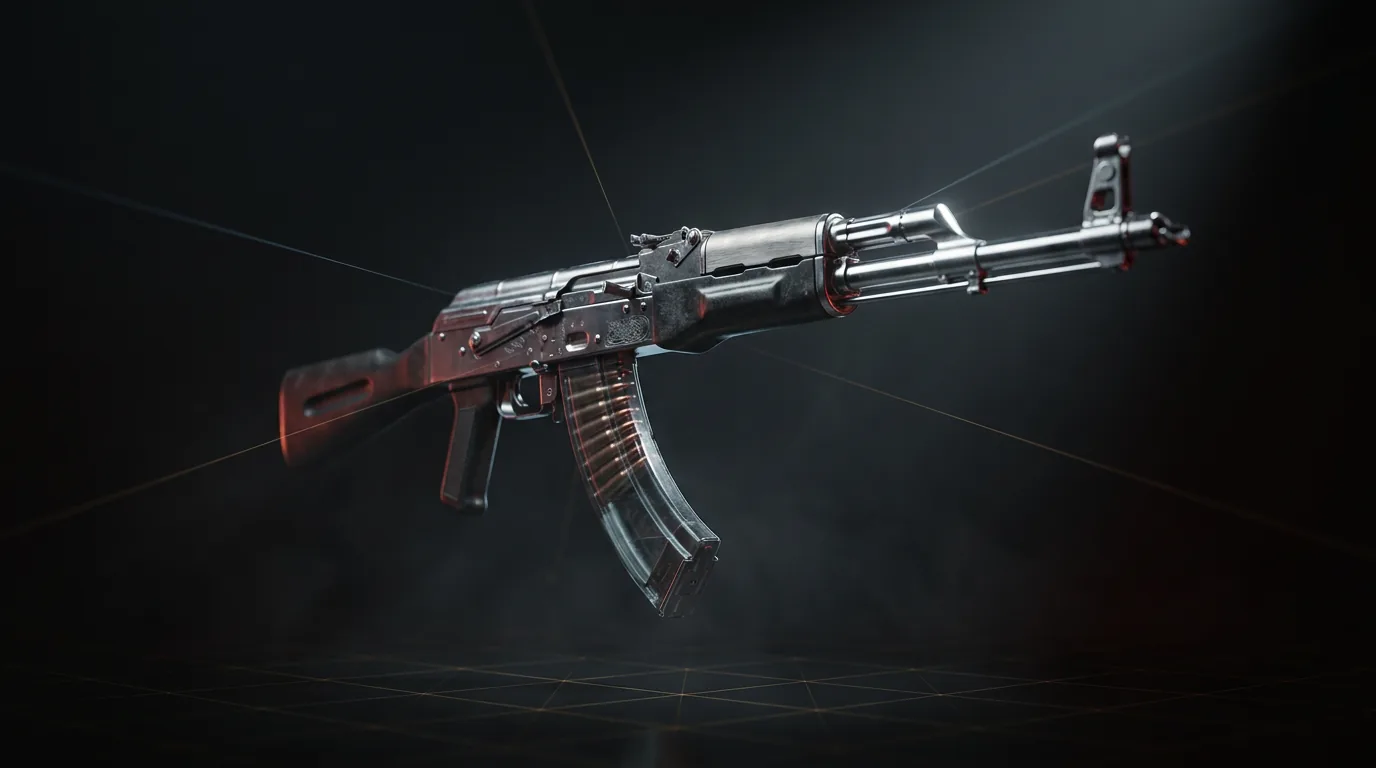
A skin has no intrinsic price. What it has is a clearing point — the number where someone willing to sell meets someone willing to buy, right now. Everything people call “the price” is an estimate of where that point currently sits, and understanding what pushes it around is the whole game.
Supply: where copies come from, and why it rarely shrinks
Every copy of a skin that has ever existed was created by the game, and almost none of them are ever destroyed. That single asymmetry drives most of the long-term price behaviour in CS2.
Copies enter the world through a handful of taps. Weekly drops hand out items from a rotating pool. Cases are opened, producing skins and the occasional knife or gloves. Souvenir packages are distributed during Majors and unpack into Souvenir items. Operations and campaigns add their own reward pools while they’re running.
The critical mechanic is that these taps get turned off. Valve rotates which cases drop, and once a case leaves rotation it stops generating new copies of everything inside it. The existing supply is now fixed — and from that moment the only direction the population of that skin can go is very slightly down, as copies get consumed by trade-up contracts or sit in abandoned accounts.
This is why age is such a strong predictor of price. Two skins of identical rarity and similar quality can trade at wildly different levels purely because one came from a case that stopped dropping years ago and the other is still being manufactured every week by hundreds of thousands of players. When someone asks why an old blue-tier skin outprices a new pink one, that’s the answer.
Trade-ups are the only real sink in the system, and they’re a small one. Ten items in, one item out, which slowly thins the lower tiers of collections people actively farm. It doesn’t come close to offsetting the inflow on an actively-dropping case.
Demand: what players actually want to hold
Supply sets the denominator. Demand sets everything else, and it’s much less evenly distributed than new traders expect.
Weapon choice dominates. A small group of weapons carries most of the market. Rifles that get bought in the majority of rounds, the AWP, the pistols people actually use on eco, and knives and gloves — which are visible constantly in first person — absorb most buying interest. Skins for weapons that rarely leave the buy menu are cheap almost regardless of tier, because the demand pool for them is tiny.
Visibility in first person matters more than beauty in the inspect screen. A skin that looks incredible from a third-person render but presents as a smudge of grey at the bottom of your screen during a round will underperform. Traders learn to evaluate skins from the viewmodel, not the workshop image.
Design ages unevenly. Colourways that read cleanly against common map palettes, that don’t clash with popular agent models, and that photograph well in clips tend to hold demand. Fashion in CS2 is real and it moves.
Attention drives flows. When a skin gets used by a prominent player, shows up in a widely-watched clip, or becomes associated with a meme, demand can move fast. Most of that decays; some of it sticks and permanently changes a skin’s tier of desirability.
The modifiers stacked on the base skin
Once you know the base value of a finish, the specific item in front of you is that base value adjusted by a set of independent modifiers.
| Modifier | Direction | Notes |
|---|---|---|
| Wear bracket | Usually cleaner is dearer | Not always — some skins look better worn, and capped skins invert expectations |
| Exact float | Premium at bracket edges and extremes | Only where the difference is visible or actively collected |
| Pattern index | Can dwarf everything else | Only on finishes where pattern varies meaningfully |
| StatTrak | Premium on popular weapons | Can be neutral or negative on weapons nobody plays |
| Souvenir | Highly variable | Depends entirely on the stickers and the event |
| Applied stickers | Adds a fraction of sticker value | Rarely the full amount; scarcity and placement matter |
| Name tag | Usually a small negative | Custom names narrow the buyer pool |
| Charm attached | Small, situational | A separate collectible with its own pattern |
| Trade lock | Discount while locked | The market pays for immediacy |
The mistake here is treating modifiers as additive percentages. They interact. A rare pattern on a badly-worn copy of an unpopular weapon is worth far less than the same pattern on a clean AK. StatTrak on a skin whose whole appeal is a clean uninterrupted surface is worth less than StatTrak on a busy design where the counter fits in visually.
Friction: fees, spreads and liquidity
Every price you see is a price net of somewhere. The Steam Community Market takes a cut in the region of 15% of the buyer’s price, split between Steam and the game. That means the number a buyer pays and the number a seller receives are meaningfully different, and comparing across venues without accounting for it produces nonsense.
Liquidity is the other half of friction. A skin with hundreds of copies listed has a tight spread and a reliable price. A skin with three copies listed has whatever the three sellers decided that morning. On thin items, the “market price” is often just the most recent optimistic listing, and it can sit far above what anyone has actually paid.
Trade locks add a third dimension. Items under a trade cooldown can’t be moved for seven days, so they trade at a discount to unlocked copies. That discount is a real, rational price for time and risk — the buyer is taking market exposure they can’t exit.
Why one skin has several different prices
Ask three people what a skin is worth and you’ll get three numbers, all defensible, because they’re measuring different things.
The lowest asking price is what the cheapest seller hopes to get. It’s an offer, not evidence — nobody has agreed to it.
The recent sold price is what buyers actually paid. This is the most honest single number, though on thin items it can be stale or driven by a single motivated buyer.
The highest standing buy order is what someone will pay instantly, right now. It’s the floor — the number you can realistically liquidate into without waiting.
The gap between the top buy order and the lowest ask is the spread, and it’s the true cost of round-tripping an item. On liquid skins it’s narrow. On rare patterns and high-value items it can be enormous, which is why headline valuations on unique items should always be read with scepticism.
What actually moves prices
Case rotation and retirement. The single biggest scheduled supply event. When a case stops dropping, its contents change trajectory.
New content. Every new case, operation or collection adds competing supply and pulls buyer attention. Older items often soften while a new release absorbs spending.
Majors. Souvenir packages flood specific collections with new stickered copies, and sticker demand spikes around the event. Both effects have a before, during and after.
Game updates. Rendering changes, model reworks, inventory features and inspect changes have all shifted how skins look and how people value them. A visual overhaul can revalue an entire class of finishes.
Meta shifts. If a weapon becomes stronger or more commonly bought, demand for its skins follows.
External liquidity. Broad interest in skin trading rises and falls, and the whole market moves roughly together when it does. Individual items look like they have their own stories; often they’re just riding the tide.
The misreadings that cost people money
Treating a single listing as the market price. Comparing a stickered item to an unstickered baseline. Assuming a rare pattern claim is true without checking what the pattern class actually is. Reading a low-liquidity item’s asking price as achievable. Forgetting that a trade-locked purchase carries a week of unhedged exposure. Assuming rarity tier and price are the same axis.
Each of these is a failure to ask the same question: what has this actually sold for, in this exact configuration, recently?
Practical takeaway
Price a skin in layers. Start with the base finish — how popular is the weapon, is the design good, and has the source case stopped dropping? Then apply the modifiers on the specific copy in front of you: wear, float position, pattern, StatTrak, stickers, trade lock. Then sanity-check against what comparable copies have actually sold for, not what optimistic sellers are asking.
Finally, respect liquidity. An item you can sell in an hour and an item you might sell in three months are not the same asset, even at the same headline number. The most reliable edge in skin trading isn’t predicting the next price move — it’s consistently understanding what you’re actually holding.